14 Jul 2026
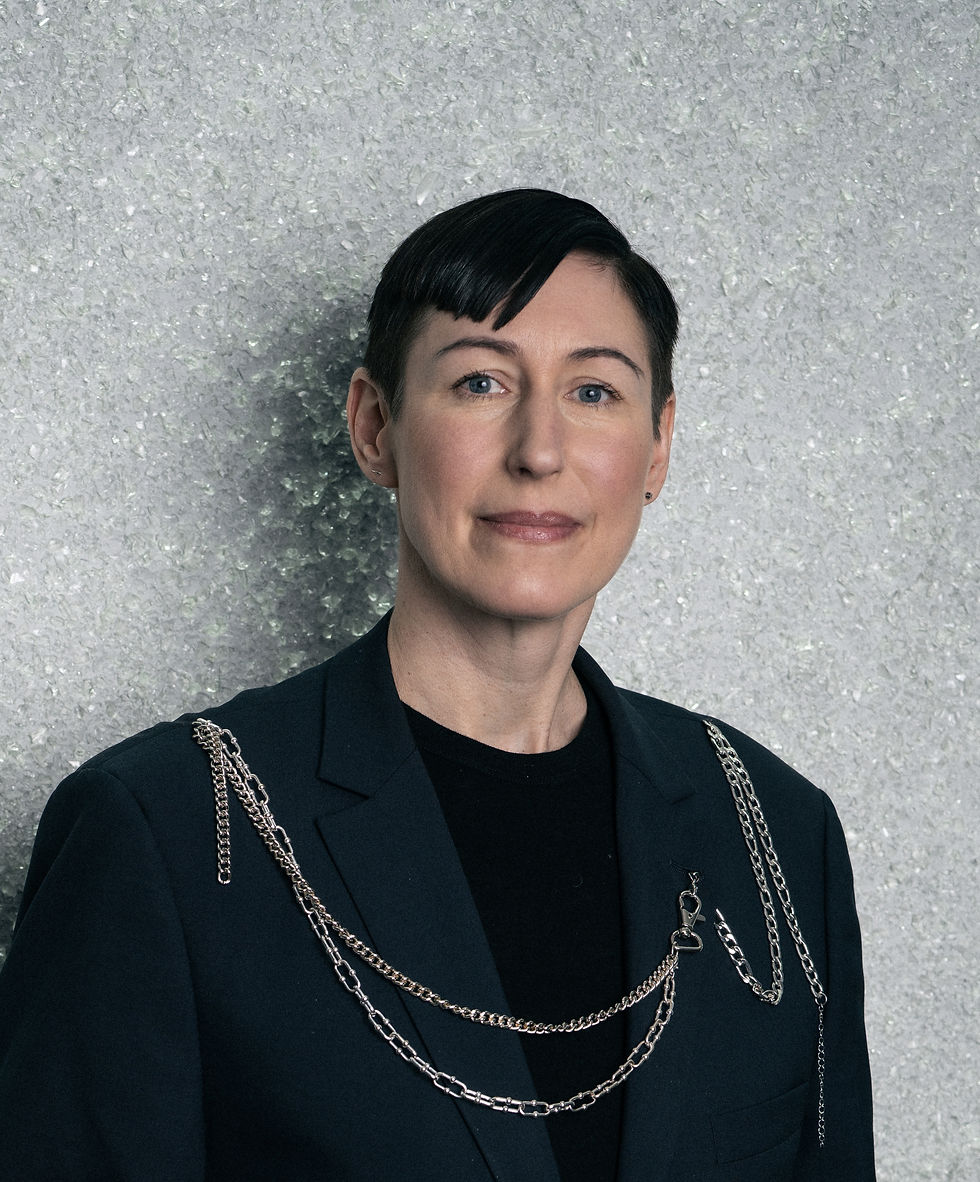
Magdalena Schaffrin has little patience for the perennial cliché of the shapeless burlap sack. "Sustainability has nothing to do with style," says the Berlin native, who has been building organizations at the intersection of fashion, politics, and business for more than 20 years. From the NEONYT fashion fair to VORN – The Berlin Fashion Hub and studio MM04: with her projects, Schaffrin shapes important debates about responsible clothing production and a regenerative economy.
Since November 2026, Magdalena Schaffrin has also been a member of the Advisory Board of the Fashion Council Germany. In this interview, she explains why sustainability is not a compromise for many companies, but rather a survival strategy.
Magdalena, you are one of the most prominent sustainability experts in the German fashion industry. Can you still remember the moment in your life when you thought: This is my calling! It wasn't a single moment, but rather an early influence: My father was a professor of electrical power engineering and researched renewable energies; both my parents were also active in the peace movement. This means that I was exposed to many things in my childhood that still concern me today, and later I tried to combine this value system with my passion for fashion. However, in 2005, when I completed my fashion design studies at the Berlin University of the Arts, there were very few brands that were even working sustainably, and virtually none that interested me as a designer from a creative perspective.
You founded a fashion label under your own name back then, but ultimately found your true calling in communicating these topics, including consulting and networking. That's right. I realized early on that there was definitely a response when I spoke about sustainability in the fashion industry – that people were already interested even back then, although the topic wasn't yet so dominant. Now I offer brands and companies a focus on circularity strategy consulting, sustainability communication, and marketing services. As early as 2009, I founded the Greenshowroom fashion trade fair, which we sold to Messe Frankfurt in 2011 and expanded with the Ethical Fashion Show Berlin. Both formats took place as part of Berlin Fashion Week and were the first of their kind there. In 2018, we realized that the concept needed a realignment and that the names were no longer relevant. This is how we launched Neonyt – a portmanteau of the Greek and Swedish words for "new" – which, in addition to the fashion fair, combined various formats, such as a dedicated influencer platform, a conference, and a curated fashion show. Furthermore, I co-founded the agency studio MM04, VORN – The Berlin Fashion Hub, and other projects like 202030 – The Berlin Fashion Summit, which continues today as the 202030 Think & Do Tank.
You just mentioned that the names "Greenshowroom" and "Ethical Fashion Show" eventually became outdated. What do you mean by that? Sustainability, first and foremost, has nothing to do with style. Sustainability refers to materials, their origin, production conditions, and other aspects. A brand's style arises from its design, marketing, and positioning. I still believe that value-driven designers don't produce work of any less quality or with less design ambition. I'm glad that the topic is now firmly established in the industry and is understood as a genuine field of innovation. The name Neonyt, meaning "new new," conveyed this in a completely different way.
Can you describe the "new new" in more detail?
Fundamentally, it's important to me to let go of the idea that we have to do everything the way it used to be: having clothes made in a tailor's workshop or, even better, knitting them ourselves – consuming as little as possible. That's certainly a commendable approach and, in the end, the right one, but it doesn't reflect our reality. The consumer goods industry, in which we work, operates on a simple principle: products are sold for profit. And fashion brings a lot of joy, creativity, and culture to society! I think we should transform from a linear system to a circular one and offer services beyond the products themselves, for example, to generate additional revenue. It's about quality, craftsmanship, socially responsible and resource-efficient production, recyclability, and many other related topics, such as avoiding overproduction. The fashion industry needs to innovate from within – and remain attractive and appealing from the outside.
Do you think the realization that sustainable designs can be just as beautiful as conventionally produced pieces has finally reached end consumers?
I do think more people would agree with that by now – but I also know that the question of sustainability hardly plays a role at the moment of purchase. Other factors such as style, price, or brand are still decisive. I constantly emphasize this insight from consumer psychology, which hasn't yet reached all players in the industry. Consumers now expect brands to address the issue and take active measures – which contributes to the brand's appeal.
But how do you manage to convey this message time and time again? Why should a fashion brand operate in the most environmentally friendly way possible if it doesn't ultimately boost sales?
The reasons why companies are positioning themselves differently today have changed in recent years. The Fairtrade movement, which slowly took shape in the 1950s and 60s, was initially about a kind of rediscovered humanity – the idea of treating others and the environment as fairly and gently as possible, and also about a certain obligation to the Global South, based on the colonial history of our country and many others. Nowadays, however, many large companies make sustainable decisions based on risk assessment and compliance. Put simply: if a material I use to make my products eventually becomes unavailable, I'll have a problem if I want to continue selling them; or if climate change leads to increasingly frequent floods or other disasters at my production sites, the same applies. This means that some fashion companies have recognized that, for example, biodiversity or climate protection are not romantic niche topics, but rather essential for resource conservation and, in some cases, cost savings. For them, sustainability is no longer a cute marketing gimmick, but ultimately a question of securing the future.
So, has sustainability been too often romanticized as a consumer issue in recent years?
I completely agree! For far too long, discussions have revolved around who actually bears the responsibility, whether people simply need to consume less or differently. And again: It's commendable when consumers do this – buy less, adopt a vegan or vegetarian diet, stop flying. But I see the responsibility for truly comprehensive change very clearly lying with business and politics. Politicians have recognized their responsibility and are implementing it – slowly and in small steps – in legislation and regulation, for example, in the form of the Green Deal at the EU level. Nevertheless, the framework and competitive conditions have not yet been adapted to such an extent that companies operating more sustainably are not disadvantaged. The companies themselves, in turn, are responsible for knowing their supply chains and monitoring compliance with social standards, but also for initiating the necessary reforms to operate in a circular system in the future. We in communications, meanwhile, have the task of further promoting the cultural shift that is needed to consume differently and to truly integrate circularity into our lifestyles. For this, we develop the necessary narratives and stories – the language of fashion is wonderfully suited to this, as it communicates so strongly emotionally and visually.
I just asked how you convince fashion brands of your issues – now I'd like to ask the same question again in relation to politics: How do you convince politicians to create the framework conditions you're talking about, when sustainability isn't an issue for end consumers and therefore not for voters?
The claim that politicians only use issues to gain votes strikes me as a bit of an exaggeration. The European Green Deal, for example, which aims to make Europe the world's first climate-neutral continent by 2050, was largely driven by EU Commission President Ursula von der Leyen. And I do believe that such decisions are made out of a sense of responsibility to make Europe fit for the future. Furthermore, sustainability, even if it isn't always consistently reflected in one's own actions, is indeed an issue for many voters: numerous surveys show that people in Germany have a positive attitude towards the topic, find it important, and somehow appealing.
This ties in with a conversation I had a few years ago with Sephora's global CEO: He told me at the time that different countries have different needs, which are then reflected in the different Sephora stores. In Japan, for example, the focus is on the most original decorative cosmetics possible, while in Germany, cosmetic brands that at least look eco-friendly are popular.
I believe this also has sociological and cultural reasons: The romanticization of nature plays a major role in German culture; for example, the German forest was idealized as a place of longing in many poems and legends at the beginning of the 19th century. Accordingly, Germany also has a relatively long tradition of ecological movements and concepts like Demeter farms and brands like Dr. Hauschka, which have existed for many years. Therefore, when I first started looking into this topic, I expected an innovative fashion scene to quickly emerge in Germany, one that focused on sustainable production methods and fibers. But that took a relatively long time. And Germans are also bad at effectively marketing their strengths.
What do you mean?
Despite the long tradition I just described, the prevailing opinion in Germany, for example, is often that Scandinavian countries are much further ahead in these areas. Copenhagen, for instance, is certainly a city that has spearheaded many excellent projects – but above all, it's a city that does very good marketing. It has managed to cultivate a positive image of itself. Developing such self-confidence and then effectively promoting oneself – that's something we Germans sometimes find difficult. Which, I think, is also reflected in the understated fashion sense of many people in Germany.
Speaking of fashion in Germany: Since November, in addition to your many other responsibilities, you've also been a member of the Advisory Board of the Fashion Council Germany. Why did you decide to take on this role?
Many years ago, I explored the connection between fashion and identity in Germany in my diploma thesis – the topic is simply very close to my heart. And since one of the Council's goals is to present fashion as a cultural asset and, moreover, to position German fashion internationally, I find your work very valuable and important.
AUTHOR
Manuel Almeida Vergara
CONTACT PERSON
Manuel Almeida Vergara
REQUEST INFO
MEMBERS