29 Jul 2026
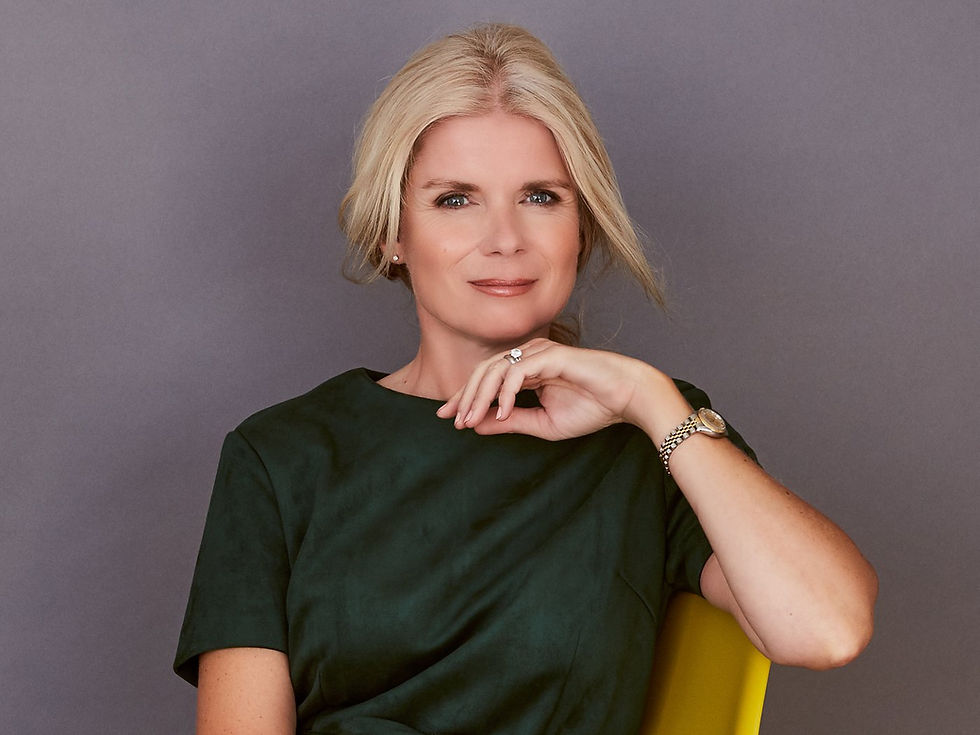
Paper or screen? For Manuela Kampp-Wirtz, this question only really arises in her private life. Specifically, whenever she decides whether to relax on the sofa and browse through a fashion magazine or quickly gather some shopping ideas on her smartphone. As CEO of Burda Hearst Publishing & BurdaVerlag Publishing, Manuela Kampp-Wirtz is responsible for the media company's lifestyle division, including Bunte magazine. Bunte.de, and recognizes its own unique potential in both print and online media.
As a patron, Burda, whose portfolio includes several of Germany's most important fashion media brands, is one of the earliest and largest supporters of the Fashion Council Germany. In this interview, Manuela Kampp-Wirtz tells us why this commitment to the industry is so important to her, how tradition and progress are not mutually exclusive in a media company, and when she prefers Elle and when she prefers InStyle.
Manuela, what significance do you attribute to fashion today?
Fashion represents individuality and the spirit of the times. This is particularly evident among young people today, who primarily want to emphasize their personality through the fashion they wear. Consequently, fashion has recently become even more diverse and less bound by prevailing trends and norms.
So would you have answered this question differently ten years ago?
Fashion has always played a vital role, reflecting the spirit of the times and often even anticipating societal developments. Trend researcher Lidewij Edelkoort demonstrates what a social seismograph fashion is and what trends it reveals to society. Reflecting such relationships has always been a function of fashion. The major difference for designers today is that they have never before had the opportunity to gain visibility as quickly as they do now.

And how has the role of a media company whose portfolio includes several relevant fashion titles changed in recent years?
We continue to place great emphasis on high-quality curated content, compelling photoshoots, and premium paper. At the same time, we have significantly expanded our digital platforms over the past ten years, as well as our presence on TikTok and Instagram. This has also changed the demands placed on our editorial and marketing teams: they have themselves become strong content creators. As a result, their work is more extensive and much more exciting than it was ten years ago. However, one thing has remained constant: renowned designers and brands still want to be featured in the print magazine—in interviews or as part of extensive photo spreads.
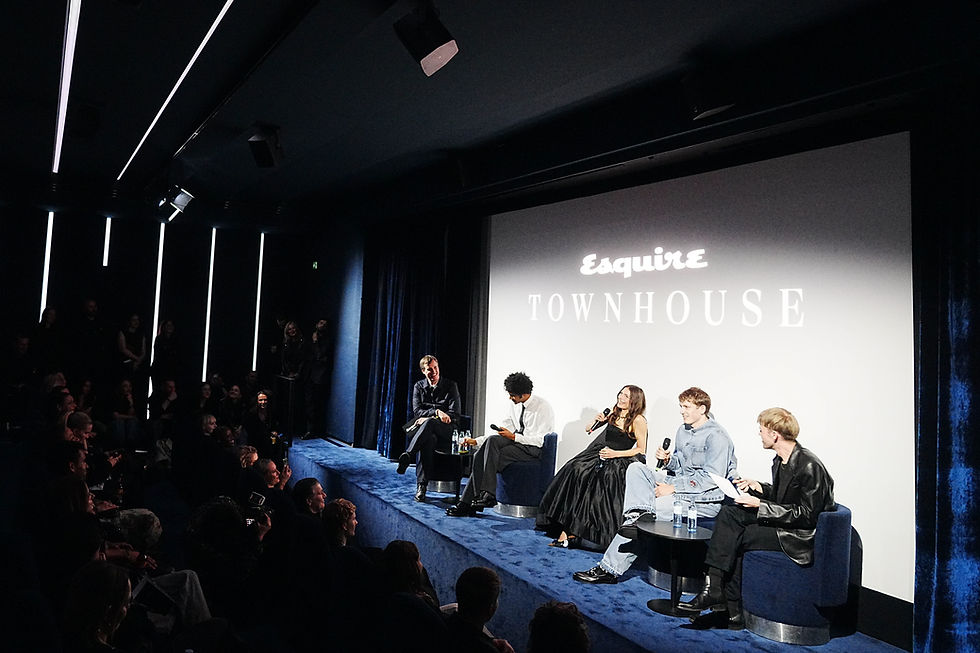
Burda owns four of Germany's most prestigious fashion magazines: Harper's Bazaar, Elle, InStyle and Esquire.
That's right, and we're very proud to have these strong brands in our portfolio. We make sure they are clearly differentiated: with different positioning, target groups, needs, and thematic focuses. They should complement each other without overlapping—otherwise, they would ultimately cannibalize each other. With its over 150-year history, Harper's Bazaar is considered the mother of all fashion magazines; the German edition is also positioned in the high-end segment and is presented in an edgy and deliberately exaggerated style. We see Elle more as a magazine for elegance and style that emphasizes timeless values. InStyle has a different focus again: As a "star fashion magazine," the editorial team deliberately focuses on generating purchase impulses—for example, with tips on how to recreate celebrity looks. And Esquire is a men's magazine with a focus on fashion, culture, technology, and entertainment.

Do you sometimes find completely different assessments of designers and their work in the various publications, reflecting their independence? Do you discover contradictions that surprise you?
I wouldn't speak of contradictions, but rather of different curation: Everything in the respective magazines is very clearly tailored to the individual target group. The topics may well be similar, but the perspective and attitude are different—just as the respective readerships differ.
Are there things you prefer to read in a printed magazine rather than online — and vice versa?
Yes, absolutely! For quick inspiration, tips, or shopping ideas, I naturally prefer to use our online platforms, where I might discover "the five must-have bags" or "the season's most beautiful shoes." It's convenient because I can click and shop directly. But when I really want to relax and read, I still love reaching for our magazines: InStyle offers a great mix of everything that's currently important in fashion; Elle is known for its in-depth features, which I personally appreciate because they focus so strongly on women and their needs; Harper's Bazaar invites you to dream and also offers inspiration when it comes to art and culture. For me, these are true lean-back moments—on the sofa, at the beach, or on a plane.

Back to digitalization: How has it changed not only your media company, but also your specific daily work routine in recent years?
Digital development—and, more recently, the advancement of artificial intelligence—is, of course, extremely dynamic. This makes the current climate particularly exciting for a media company, as we have to adopt entirely new technologies while simultaneously keeping pace with rapidly changing user habits. What we've identified as especially important, both with regard to our own platforms and our presence on TikTok and Instagram, is personalization: How can we address end customers in the most targeted way possible? Where can we find suitable content creators to collaborate with? How can we build and maintain trust with these influencers? And, of course, how do we want to deal with AI? Artificial intelligence can ultimately make research easier for our editors and free up more time for our copy editors to focus on truly demanding tasks. At the same time, we continue to believe in everything that is "human-made." Overall, everything in our media company has become a bit faster. And that demands a lot from everyone—including me.
What specific role does affiliate marketing play for you?
Affiliate marketing is becoming increasingly relevant—especially for curated magazines like ours, which showcase products from the cosmetics, jewelry, and fashion sectors. It's therefore crucial for us to offer consumers the opportunity to shop directly—something that wasn't possible with print media alone. Today, we can link directly to online shops or brands from an article or our InStyle and ELLE shops, which has naturally become an important monetization tool for us. However, we always want and need to present all featured products credibly, contextually, and in a way that is tailored to our target audience. This is labor-intensive, but enjoyable—especially for our readers.
You can therefore orient yourself even more closely to the needs of the readers than before.
Exactly — and that's very important to us! We want to get to know our readers better, to create immersive experiences around our media brands. For me, this is currently one of the most important topics in our media business: putting our consumers more and more at the center and building a direct customer relationship.
Burda is also a patron of the Fashion Council Germany — one of its biggest supporters. What motivated you to become a member back in 2019?
Since our media brands are very internationally positioned and operate accordingly, I've long observed that countries like France and Italy have had strong councils and similar associations for decades—this wasn't the case in Germany, and there was also little public funding for promising talent. Yet the fashion industry is so important to our country's economy; after all, retail, production, and thus many jobs depend on it. Because the Fashion Council Germany recognizes and aims to promote precisely this, it quickly became clear to us that we wanted to be involved. Today, I'm personally very impressed by what the Fashion Council Germany has achieved since then: the close collaboration with the Berlin Senate, for example, but also with the European Commission, and most recently the reception at the Federal Chancellery during Berlin Fashion Week in the presence of Chancellor Friedrich Merz—this simply demonstrates that the industry in Germany has a powerful voice in the Fashion Council Germany.
But can you, as a media company, actually derive any concrete benefit from your membership?
Yes, for example, by getting early insights into trends, moods, and sustainability topics through your channels, and by being able to stay close to young designers. With you, we feel on the cutting edge and constantly inspired. I also fondly remember the finance seminars I gave as part of one of your events: Together with young talents, we created business plans, discussed taxes, and outlined the practical aspects of starting a company. That has remained such a vivid and positive memory because it was precisely there that I could feel the optimism and ease that young talents radiate. Portrait photo: Kathrin Makowski
AUTHOR
Ronja Hetland & Sinah Griessler
CONTACT PERSON
Manuel Almeida Vergara
REQUEST INFO
MEMBERS